Why Coffee Is So Popular in Greece: A Look at the Greek Coffee Culture Phenomenon
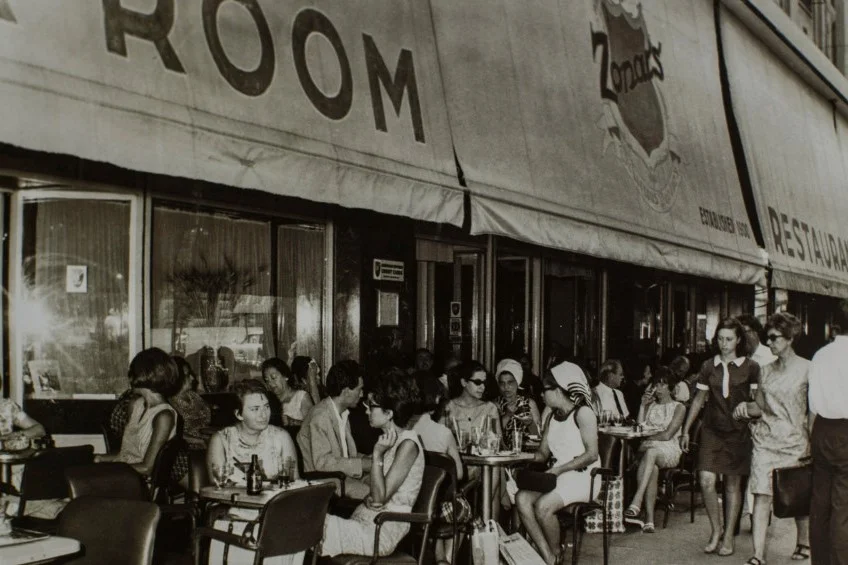
Anyone who has wandered through Athens, Thessaloniki, or even the smallest island village will have noticed the same scene repeated endlessly: tables spilling onto pavements, frappé glasses sweating in the sun, and conversations stretching lazily across entire afternoons. Coffee in Greece is not merely a beverage. It is a social institution, a cultural inheritance, and, some would argue, a national pastime bordering on obsession. Greeks rank among the highest per-capita coffee consumers in Europe, and the question of why coffee is so popular in Greece — and why Greeks drink so much of it — deserves a closer look through the lens of history, sociology, and everyday life.
A Legacy Brewed Under Empire: The Ottoman Origins of Greek Coffee
To understand Greek coffee culture, one must begin in the sixteenth and seventeenth centuries, when coffee arrived in the Greek-speaking world through the Ottoman Empire. The kafeneio — the traditional Greek coffee house — emerged as a direct descendant of the Ottoman kahvehane, and it quickly became far more than a place to drink. It was a forum for news, politics, commerce, and gossip; a male-dominated public sphere where village affairs were debated and reputations made or unmade.
The drink itself, the thick, unfiltered brew prepared in a small long-handled pot known as a briki, became deeply embedded in daily ritual. Served in a small cup with the grounds settling at the bottom, it demanded patience. One did not gulp it; one sipped it slowly, often accompanied by a glass of cold water and unhurried conversation. Even the leftover grounds acquired cultural significance through the folk practice of tasseography — reading one's fortune in the patterns left in the cup.
For much of the twentieth century, this beverage was known as "Turkish coffee" in Greece. Following the political tensions of the 1950s and the Cyprus crisis of 1974, a deliberate renaming took hold, and "Greek coffee" (ellinikós kafés) became the standard term — a striking example of how national identity can be projected onto something as ordinary as a morning drink. The coffee remained identical; the name became an act of cultural ownership.
The Kafeneio: Greece's Original Social Network
The traditional kafeneio deserves particular attention in any discussion of why coffee holds such a privileged place in Greek life. In rural Greece especially, the kafeneio functioned for generations as the village's beating heart — part town hall, part newsroom, part employment exchange. Farmers negotiated harvest prices there, political factions claimed rival establishments, and the rhythms of community life were measured out in small porcelain cups.
Sociologists studying Mediterranean societies have long observed that Greek social life is intensely oriented toward the public sphere. The concept of parea — the close-knit company of friends with whom one habitually socialises — is central to Greek identity, and coffee is its lubricant. To invite someone "for a coffee" in Greece is rarely about caffeine. It is an invitation to talk, to connect, to spend time without an agenda. The coffee is almost incidental; the togetherness is the point.
This explains a phenomenon that often baffles visitors: a Greek may sit with a single coffee for two or three hours, and no waiter will dream of hurrying them along. The purchase of a coffee is, in effect, the rental of social space and time. In a culture that prizes leisure, conversation, and the art of lingering — what Greeks might describe as part of the broader philosophy of enjoying life slowly — the coffee cup becomes a licence to pause.
The Frappé Revolution: A Modern Greek Invention
If Greek coffee tells the story of tradition, the frappé tells the story of modern Greece. Invented almost by accident in 1957 at the Thessaloniki International Fair, when a Nestlé representative improvised by shaking instant coffee with cold water and ice, the frappé became a runaway national success. By the 1970s and 1980s, this frothy iced coffee had conquered the country, perfectly suited to the long, hot Mediterranean summers and to the emerging café culture of urban youth.
The frappé did something remarkable: it democratised and modernised coffee drinking without abandoning its social function. Young Greeks who found the old kafeneio stuffy and patriarchal flocked instead to the kafeteria — the modern café — where the frappé reigned. The drink became a symbol of post-war Greek modernity, leisure, and even a certain laid-back national self-image. Its successors, the freddo espresso and freddo cappuccino, which swept through Greece in the 2000s, continue this distinctly Greek tradition of cold coffee innovation, and today the freddo is arguably the unofficial national drink of anyone under fifty.
Why Do Greeks Drink So Much Coffee?
Statistics consistently place Greece near the top of European coffee consumption rankings, with the average Greek drinking multiple cups per day. Several intertwined factors explain this remarkable appetite.
First, coffee structures the Greek day. The morning coffee at home or on the way to work, the mid-morning coffee at the office, the afternoon coffee with friends, the evening coffee that stretches into the night — caffeine punctuates Greek time in a way few other cultures match. Where other nations might mark the day with meals or tea, Greeks mark it with coffee.
Second, the climate and urban design favour café life. With over 250 days of sunshine annually in much of the country, outdoor seating is viable nearly year-round. Greek cities and villages are built around squares — plateies — that naturally fill with café tables. The environment itself invites people outdoors and into cafés.
Third, coffee is economically accessible sociability. During the financial crisis that began in 2009, analysts noted a telling pattern: while Greeks cut spending on restaurants, clothing, and travel, café spending proved stubbornly resilient. A coffee remained the cheapest way to maintain a social life, to leave the house, to preserve dignity and normality amid economic collapse. The crisis, paradoxically, may have reinforced coffee's role as the affordable cornerstone of Greek social identity.
Fourth, there is the question of pace and philosophy. Greek culture retains a strong attachment to unhurried time — the famous siga siga ("slowly, slowly") ethos. Coffee drinking, particularly the slow ritual of Greek coffee or the leisurely freddo session, embodies resistance to the accelerated rhythms of modern work culture. Anthropologists have suggested that the Greek café functions as a space where time is reclaimed from productivity and returned to human connection.
Is It Too Much? The Health Paradox
Do Greeks drink too much coffee? Medical opinion offers a surprisingly nuanced answer. Researchers studying the elderly population of the island of Ikaria — one of the world's celebrated "Blue Zones" where people routinely live past ninety — found that moderate consumption of boiled Greek coffee was associated with better endothelial function and cardiovascular health. The traditional preparation method, which leaves the grounds in the cup, preserves protective polyphenols and antioxidants that filtered methods remove.
That said, the modern Greek coffee habit is not without its critics. The contemporary preference for large, sugar-laden frappés and freddos, often consumed three or four times daily, departs considerably from the small, slowly sipped traditional cup. Excessive caffeine intake, sleep disruption, and the sugar content of modern preparations raise legitimate health questions. The issue, as so often, is not coffee itself but quantity and preparation.
Yet framing Greek coffee consumption purely as a health matter misses the point. For Greeks, the cost-benefit calculation includes variables that laboratory studies cannot measure: friendship maintained, loneliness kept at bay, community sustained. If coffee is the price of three hours of conversation with one's parea, most Greeks would consider it a bargain at any caffeine level.
Coffee as Greek Identity
Ultimately, the popularity of coffee in Greece cannot be explained by taste or caffeine dependency alone. Coffee in Greece is a vessel for identity. It connects the modern Greek to Ottoman-era ancestors reading fortunes in coffee grounds, to grandfathers debating politics in village kafeneia, to the optimistic post-war generation shaking their first frappés, and to today's students nursing freddos through long Athenian evenings.
Few countries have so thoroughly woven a beverage into their national fabric. The Greek does not simply drink coffee; the Greek inhabits coffee — its rituals, its spaces, its rhythms. To ask why Greeks drink so much coffee is, in the end, to ask why Greeks value conversation, leisure, and human connection so highly. The answer sits steaming — or sweating with ice — on a million café tables across the country, every single day.
Coffee culture in Greece isn't just a habit; it's a way of life. If you want to live the authentic Greek coffee experience, we are waiting for you in Limenas! Visit Kolatsio Coffee & More to enjoy the best coffee in Thassos, crafted with passion and love.